
Best Keyboard for Small Hands 2026: 6 Picks for Easier Reach and Better Comfort
The best keyboard for small hands is not just the smallest keyboard on the desk. It is the keyboard that reduces reach, keeps the keys you actually use, and makes typing, gaming, and office work feel easier every day.
This guide focuses on compact layouts, low-profile designs, 75%, 65%, and 60% keyboards that make sense for smaller hands. The goal is simple: help you find the best keyboard for small hands without buying a layout that looks clean but feels frustrating.

The Fast Answer
For most people, the best keyboard for small hands is the NuPhy Air75 V2. It has a compact 75% layout, low-profile keys, wireless support, and enough everyday keys that you do not feel trapped in shortcuts.
Want a more traditional mechanical feel? Choose the Keychron V1 Max. Want a premium compact layout with arrows? Choose the Keychron Q2 Max. Mostly gaming? Choose the HyperX Alloy Origins 65. Quiet office work? Choose the Logitech Pebble Keys 2 K380s.
Want the safest keyboard size for your hands?
Keyboard Finder helps you choose by layout, use case, switch feel, noise level, connection, budget, and desk setup. It is the fastest way to narrow down the best keyboard for small hands without guessing.
Get my keyboard match → Takes about 30 seconds · No signup
Best Keyboard for Small Hands – 2026 Picks
These recommendations are chosen for smaller hands specifically: shorter reach, practical layouts, lower finger travel, better desk position, and fewer daily compromises. The best keyboard for small hands should make common keys easier to reach while keeping the board useful for real work and gaming.
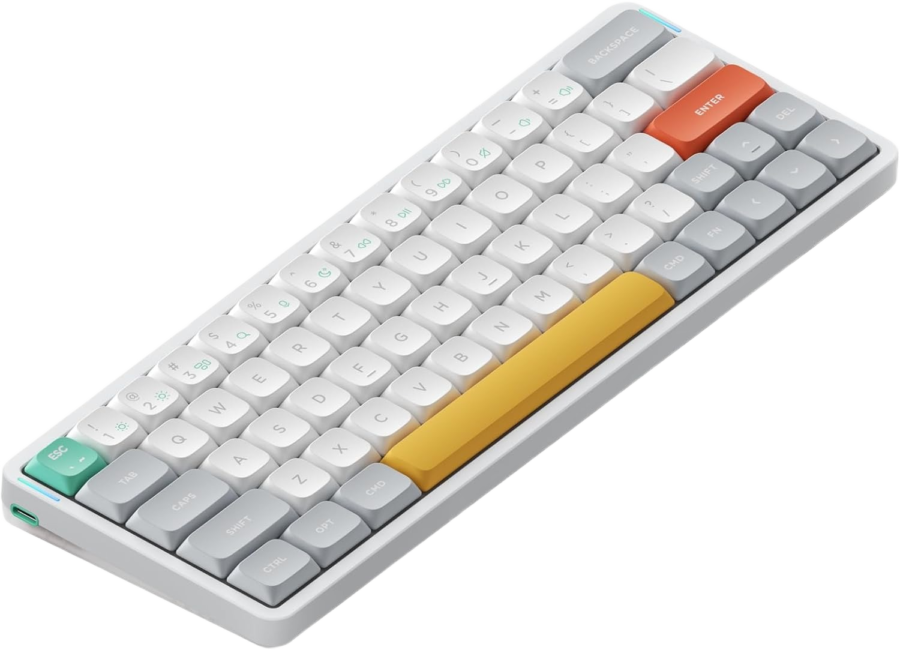
NuPhy Air75 V2
Low-profile 75% keyboard with the safest small-hand balance
Verdict: The best keyboard for small hands for most people because it combines a compact 75% layout with low-profile typing comfort.
- Best for: work, gaming, coding, travel setups, and mixed daily use.
- Why it fits: lower key height reduces finger lift, while 75% keeps arrows and function keys.
- Skip if: you strongly prefer a tall traditional mechanical keyboard.

Keychron V1 Max
75% wireless mechanical keyboard with QMK, hot-swap, and strong value
Verdict: The best keyboard for small hands if you want a real mechanical feel without jumping to a wide TKL or full-size board.
- Best for: mechanical keyboard users who want compact size without losing daily keys.
- Why it fits: 75% keeps function keys and arrows while reducing the distance to the mouse.
- Skip if: you want a slimmer low-profile keyboard or need a numpad.

Keychron Q2 Max
Premium 65% keyboard with arrows, hot-swap, and QMK/VIA
Verdict: The best keyboard for small hands if you want a premium compact board that shortens reach but still keeps arrow keys.
- Best for: premium compact setups, coding, gaming, and users who like a heavier custom-style keyboard.
- Why it fits: 65% removes width while keeping real arrow keys, which is safer than going straight to 60%.
- Skip if: you need dedicated F-keys or want a budget option.

HyperX Alloy Origins 65
Compact wired gaming keyboard with 65% layout and arrow keys
Verdict: The best keyboard for small hands if you mainly game and want more mouse room without losing arrow keys.
- Best for: gaming, FPS setups, small desks, and players who want compact width.
- Why it fits: 65% gives shorter reach than TKL and avoids the biggest 60% issue: missing arrows.
- Skip if: you want wireless or quiet low-profile typing.

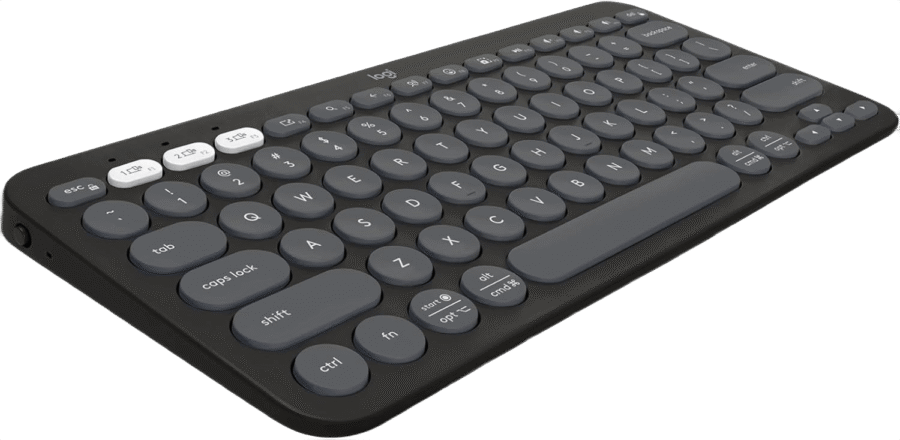
Logitech Pebble Keys 2 K380s
Quiet compact wireless keyboard for work, school, and laptop-style typing
Verdict: The best keyboard for small hands if you want a quiet, affordable, slim keyboard for everyday work.
- Best for: office work, school, travel, shared spaces, and laptop users.
- Why it fits: slim keys and compact width reduce reach without adding mechanical keyboard height.
- Skip if: you want a full mechanical feel or dedicated gaming features.
NuPhy Air60 V2
Low-profile 60% keyboard for the shortest reach and cleanest setup
Verdict: The best keyboard for small hands if you want the smallest low-profile option and are comfortable using layers.
- Best for: tiny desks, travel, minimalist setups, and users who want maximum mouse space.
- Why it fits: 60% shortens reach the most, while low-profile keys keep typing light.
- Skip if: you need dedicated arrows, function keys, or navigation keys every day.
Still between two keyboards?
The right keyboard depends on whether you need arrows, F-keys, quiet typing, low-profile height, wireless, or gaming speed. Keyboard Finder gives you a shorter shortlist based on those choices.
Find my best keyboard → Better than guessing from layout names
Small-Hands Keyboard Comparison
Small hands usually benefit from less width, shorter reach, and lower typing effort. The table below shows why the best keyboard for small hands is often 75% or 65%, not automatically 60%.
| Layout | Best for small hands when... | Main benefit | Watch out for |
|---|---|---|---|
| 75% | You want compact size without losing function keys or arrows. | Best balance of reach and daily usability. | Key placement varies between models. |
| 65% | You want a smaller board but still need arrow keys. | Shorter reach and more mouse space. | F-keys move to layers. |
| 60% | You want the smallest setup and already like shortcuts. | Maximum desk and mouse space. | No dedicated arrows or F-keys. |
| Low-profile | Your fingers or wrists get tired on taller keyboards. | Less vertical movement and flatter typing angle. | Less traditional mechanical feel. |
| TKL | You want a familiar layout and do not need a numpad. | Easy transition from full-size. | Wider than 75% and 65%. |
| Full-size | You use the numpad every day. | Best for number entry and spreadsheets. | Can push the mouse too far away. |
How to Choose the Best Keyboard for Small Hands
Start with reach, not marketing. The best keyboard for small hands should reduce finger stretching while keeping your most-used keys easy to access. A keyboard can be compact and still be wrong if it removes keys you use all day.
Choose 75% for the safest fit
- Keeps function row and arrow keys.
- Much smaller than full-size and most TKL keyboards.
- Best balance for work, gaming, and coding.
Choose 65% for compact control
- Shorter reach than 75%.
- Keeps arrow keys.
- Great for gaming and focused desk setups.
Choose low-profile for lighter typing
- Lower key height can reduce finger lift.
- Feels familiar for laptop users.
- Good for office work, school, and travel.
Choose 60% only if you like layers
- Smallest common keyboard size.
- Best for maximum mouse space.
- Can be annoying if you use arrows or F-keys often.
Low-profile vs normal mechanical
Low-profile keyboards are often easier for smaller hands because the keys sit lower and require less vertical movement. Normal mechanical keyboards can still be excellent, especially if you prefer deeper key travel and a more traditional feel. The best keyboard for small hands is the one that gives you both reach comfort and the typing feel you enjoy.
Do not go too small just because your hands are small
Small hands do not automatically mean you need a 60% keyboard. Many users with small hands are better served by 75% or 65% because those layouts reduce width without removing too many daily keys. The best small-hand setup is compact, but still practical.
Which Small-Hands Keyboard Should You Pick?
If you want the safest overall pick
Choose the NuPhy Air75 V2. It is compact, low-profile, and easy to live with for work and gaming.
If you want mechanical value
Choose the Keychron V1 Max. It gives you a strong 75% layout, hot-swap, wireless, and QMK/VIA support.
If you want premium compact feel
Choose the Keychron Q2 Max. It is the premium 65% pick with real arrows and less side reach.
If you mostly game
Choose the HyperX Alloy Origins 65. It saves mouse space and keeps gaming practical.
If you mostly work or study
Choose the Logitech Pebble Keys 2 K380s. It is quiet, slim, affordable, and easy to type on.
If you want the smallest setup
Choose the NuPhy Air60 V2. It is compact and low-profile, but only makes sense if layers do not bother you.
Common Small-Hand Keyboard Mistakes
- Buying 60% too quickly: it saves space, but missing arrows and F-keys can slow you down.
- Ignoring keyboard height: tall boards can feel more tiring for smaller hands and wrists.
- Choosing full-size by habit: the numpad is useful only if you actually use it.
- Forgetting mouse position: wide keyboards push the mouse farther away and can make your setup less comfortable.
- Only looking at aesthetics: the best keyboard for small hands should feel natural, not just look compact.
FAQ – Best Keyboard for Small Hands
Quick answers before choosing the best keyboard for small hands for your setup.
What is the best keyboard for small hands overall?
The NuPhy Air75 V2 is the best overall pick here because it combines a compact 75% layout, low-profile typing height, wireless support, and enough daily keys for work, gaming, and coding.
Is 60% or 65% better for small hands?
65% is usually safer because it keeps arrow keys while still reducing reach. 60% is smaller, but it removes more dedicated keys and can be frustrating if you use arrows, F-keys, or navigation shortcuts often.
Are low-profile keyboards better for small hands?
Often, yes. Low-profile keyboards reduce key height and can make typing feel lighter. They are especially good for users coming from laptops or anyone who feels tired using tall mechanical keyboards.
Is a full-size keyboard bad for small hands?
Not always, but full-size keyboards are wide and can push your mouse farther away. They make sense if you need the numpad. Otherwise, 75%, 65%, or TKL is usually better.
What keyboard size is best for small hands and gaming?
65% is often the best gaming size for small hands because it saves mouse space while keeping real arrow keys. 75% is better if you want function keys, and 60% is better only if you are comfortable with layers.
How do I know which keyboard fits my hands?
Start by choosing which keys you need every day, then decide how compact you can go. You can also use Keyboard Finder to compare layout, typing feel, noise level, connection, and budget.
Bottom Line
The best keyboard for small hands is the keyboard that reduces reach while keeping the keys you actually need. Choose the NuPhy Air75 V2 for the best overall balance, the Keychron V1 Max for mechanical all-round value, the Keychron Q2 Max for premium compact feel, the HyperX Alloy Origins 65 for gaming, the Logitech Pebble Keys 2 K380s for quiet office value, or the NuPhy Air60 V2 for the most compact low-profile setup.
Do not choose only by size percentage. A 60% keyboard can be perfect for one person and annoying for another. The safest way to find the best keyboard for small hands is to match layout, key access, height, noise, and use case together.
Need the fastest route? Use Keyboard Finder.
Affiliate disclosure: As an Amazon Associate, Gripyx earns from qualifying purchases.
